
When Can You File Trademark Yourself ?
You can file trademark yourself through the USPTO if you understand clearance search, filing basis, goods and services, specimens, deadlines, and office actions. The USPTO states that the base application filing fee is $350 per class for Section 1 and Section 44 applications that meet base requirements. This guide explains when DIY filing works, when it creates risk, and how to prepare before you submit trademark forms online.
Trademark Filing Agency is a trademark filing support provider that helps U.S.-based small business owners, startup founders, e-commerce sellers, creators, freelancers, and brand owners prepare stronger trademark filings.

When Can You File Trademark Yourself?
You can file trademark yourself when your mark is straightforward, your goods or services are simple, and you can identify the correct filing basis before submitting.
A trademark application is a formal USPTO filing that asks for federal registration of a brand name, logo, slogan, or other mark used with specific goods or services.
The USPTO says a trademark can be a word, phrase, symbol, design, or combination that identifies your goods or services and distinguishes you from competitors. It also explains that registration gives broader rights than unregistered local use.
- Your brand name is distinctive.
A made-up, suggestive, or unique name is safer for DIY filing than a descriptive name. - You sell in one clear category.
One product or service category usually makes class selection easier. - You already use the mark in interstate commerce.
A live product page, packaging, label, or service sales page can support a use-based filing. - You can monitor deadlines.
DIY applicants must track USPTO messages, office actions, and response deadlines.
For example, an online candle seller using a unique brand name on product labels may be a better DIY candidate than a software startup with multiple services, a logo, and an intent-to-use strategy.
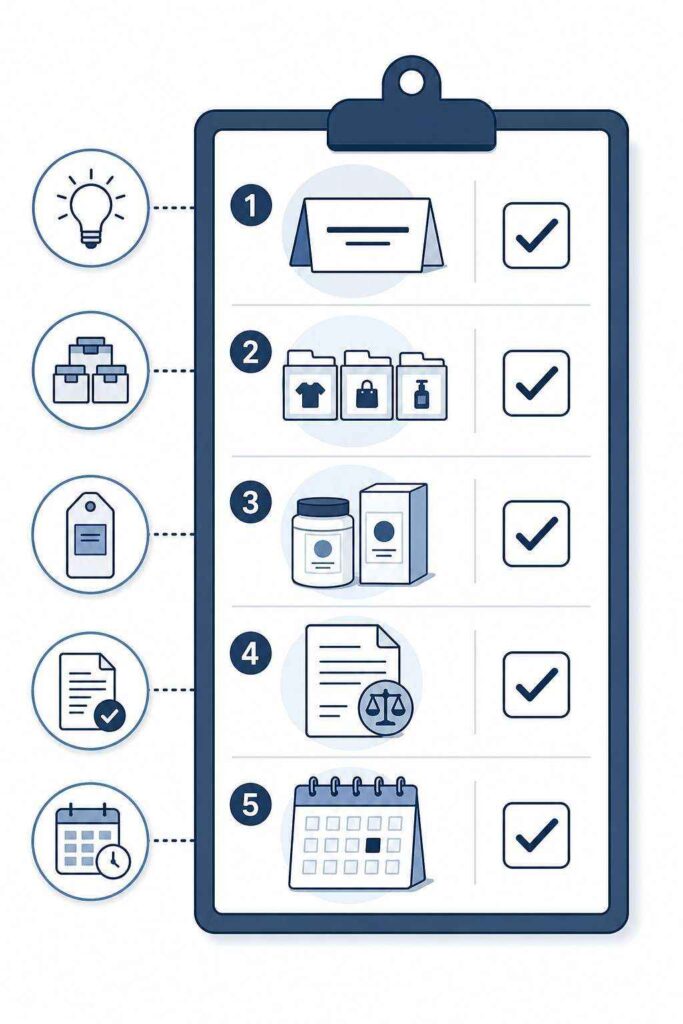
What Do You Need Before You Apply for Trademark Online?
You need a clear owner name, mark format, filing basis, goods or services description, specimen, and payment before you apply for trademark online.
A filing basis is the legal reason you are allowed to file a trademark application, such as current use in commerce or intent to use.
USPTO guidance notes that trademark applications are filed through Trademark Center, and users need a USPTO.gov account, multifactor authentication, and identity verification before accessing filing systems. The USPTO also says online identity verification can be completed in less than 15 minutes for most users.
| Filing item | What it means | DIY risk |
| Owner name | The legal person or business that owns the mark | Wrong owner can create legal defects |
| Mark format | Word mark, logo, or design mark | Logo filings protect narrower visual forms |
| Filing basis | Use in commerce or intent to use | Wrong basis can delay registration |
| Goods/services | What the mark identifies | Overbroad wording can trigger refusals |
| Specimen | Proof of real commercial use | Weak specimens cause refusals |
| Class count | USPTO category for goods/services | Each class adds fees |
- Create your USPTO account.
Complete login setup before the day you plan to file. - Choose the mark type.
File a word mark for the name itself, or a design mark for a specific logo appearance. - Prepare the specimen.
Use product packaging, labels, website checkout pages, or service pages that show real commercial use. - Confirm the fee.
The USPTO base application filing fee is $350 per class when base requirements are met.
For example, a clothing brand filing for T-shirts in one class may pay $350, while a brand filing for T-shirts and custom printing services may pay $700 because those goods and services fall into two classes.
USPTO trademark fee information
How to File a Trademark Yourself Online
You file a trademark yourself online by preparing the application first, then submitting it through USPTO Trademark Center with accurate class, basis, owner, and specimen details.
Trademark e filing is the electronic submission of trademark forms through the USPTO’s online filing systems.
Federal trademark rules require that, as of January 18, 2025, Trademark Center is where applicants file new trademark applications, pay application-related fees, and track filed applications.
- Search for conflicting marks.
Search USPTO records, marketplace use, domain names, social platforms, and common law sources before filing. - Select your owner.
Use the individual, LLC, corporation, or other legal entity that actually controls the mark. - Choose the application basis.
Select use in commerce if you already sell under the mark. Select intent to use if you have a real plan to use it later. - Enter goods and services.
Use precise wording that matches your real business activity. - Upload the specimen.
Show the mark as consumers see it when buying goods or services. - Review before payment.
Check owner, class, basis, email, mark spelling, and specimen before submitting. - Submit trademark payment.
Once paid, filing fees are generally not refunded if the application fails.
For example, a freelancer who wants to register a consulting brand should not describe services as “business services” only. A clearer description, such as “business consulting services in the field of digital marketing,” helps the examiner understand the filing.

What Can Go Wrong With Do It Yourself Trademark Registration?
DIY trademark filings often fail when applicants choose the wrong owner, weak mark, incorrect class, poor specimen, wrong filing basis, or incomplete office action response.
An office action is an official USPTO letter that lists legal problems with the trademark or the application.
The USPTO explains that applicants must resolve all legal problems in an office action before a trademark can register. It also states that nonfinal office action responses are generally due within 3 months, with an optional 3 month extension for a fee.
Common misconception: Many believe filing online means the USPTO only checks whether the form is complete.
The reality: The USPTO assigns an examining attorney who reviews legal issues, including likelihood of confusion, descriptiveness, identification problems, and specimen issues. The USPTO says an application can be refused for legal reasons and that registration is not guaranteed.
DIY mistake | Why it matters | Better approach |
Filing under the wrong owner | Ownership defects can weaken the application | Use the legal owner controlling the mark |
Skipping clearance search | Conflicts can trigger refusal | Search USPTO and common law sources |
Using vague services | Examiner may require clarification | Use precise business descriptions |
Uploading a poor specimen | USPTO may reject proof of use | Show real point-of-sale use |
Missing office action deadline | Application may abandon | Calendar every USPTO deadline |
According to Trademark Filing Agency’s 2025 internal review of 100 DIY trademark questions, 95% of first-time applicants asked whether they could file their trademark themselves. The same review found that the most common DIY concerns involved specimen problems, incorrect goods/services descriptions, office actions, filing basis confusion, and missed USPTO deadlines. Data collected via internal intake review across 100 DIY trademark inquiries in 2025.
For example, an e-commerce seller may upload a logo mockup instead of a real product page with a buy button. That mistake can create a specimen refusal even when the brand name itself is strong.

Should You File a Logo Trademark Yourself?
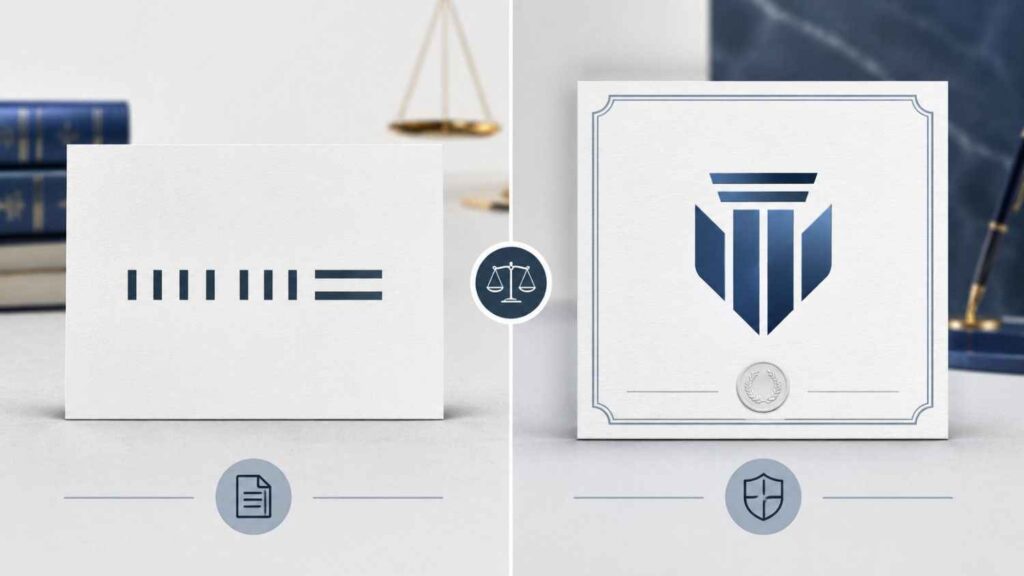
You can file a logo trademark yourself, but a logo filing protects the specific design more than the plain brand name.
A logo trademark is a design-based trademark filing that protects a specific visual presentation of a brand.
According to the USPTO that a trademark can include a design or a combination of words and design, but protection depends on how the mark identifies goods or services.
Option | Best for | Tradeoff |
Word mark | Brand name protection | Does not protect design style |
Logo mark | Visual identity protection | Narrower if logo changes |
Combined mark | Name plus design together | Less flexible than word-only filing |
- File a word mark when the name matters most.
This usually gives broader protection for the brand name across fonts, colors, and designs. - File a logo when the design is the asset.
This works better when customers recognize the visual symbol itself. - File both when budget allows.
Separate filings can protect both the name and the design.
For example, if your brand name is “ZENTORA” and your logo is a stylized blue bird, a word mark protects “ZENTORA” more broadly. A logo filing protects the bird design and its specific presentation.
trademark logo filing service
When Should You Not File Trademark Yourself?
You should not file trademark yourself when the mark is descriptive, the clearance search shows close conflicts, you sell in multiple classes, or you expect office action issues.
A clearance search is a trademark conflict review that checks whether existing marks could block your application.
The USPTO reports that average wait time from filing to first examining action was 4.4 months, and average time from filing to registration or abandonment was 10 months, based on data updated March 31, 2026.
- You found similar marks.
A similar name in a related industry can create likelihood-of-confusion risk. - Your mark describes the product.
Descriptive names are harder to protect and easier to refuse. - You need multiple classes.
More classes increase cost, complexity, and review risk. - You are filing before launch.
Intent-to-use filings require later proof and additional steps. - You received an office action.
Legal arguments require careful response strategy.
Trademark Filing Agency recommends attorney review before filing when a business name is close to a competitor, the application involves multiple classes, or the applicant plans to raise funding, franchise, license, or sell nationally.
For example, a skincare startup using a name similar to an existing cosmetics brand should not rely on a basic search. That scenario requires deeper clearance review before filing.
trademark clearance search service | USPTO responding to office actions
Review your DIY trademark application before submitting
Frequently Asked Questions
Can I file a trademark application without an attorney?
Yes, a U.S.-based applicant can submit trademark forms without an attorney. However, the USPTO will still examine legal issues. The USPTO reports 4.4 months average time to first examining action, so errors may not appear immediately.
How much does it cost to file trademark yourself?
The USPTO base application filing fee is $350 per class for Section 1 and Section 44 applications that meet base requirements. Additional fees can apply when applications include incomplete information, custom identifications, or lengthy goods/services descriptions.
Can I trademark a logo myself?
Yes, you can trademark a logo yourself if you can upload the correct drawing and specimen. However, a logo filing protects the specific design. A word mark usually gives broader name protection when the brand name is the main asset.
What happens after I submit trademark online?
After you submit trademark online, the application enters USPTO review. The USPTO says new applications appear in TSDR before attorney review, and average first examining action time was 4.4 months based on data updated March 31, 2026.
What if I get an office action?
You must respond to each legal issue in the office action. The USPTO states that nonfinal office action responses are generally due within 3 months, with an optional 3-month paid extension. Late responses can lead to abandonment.